• head_banner_01

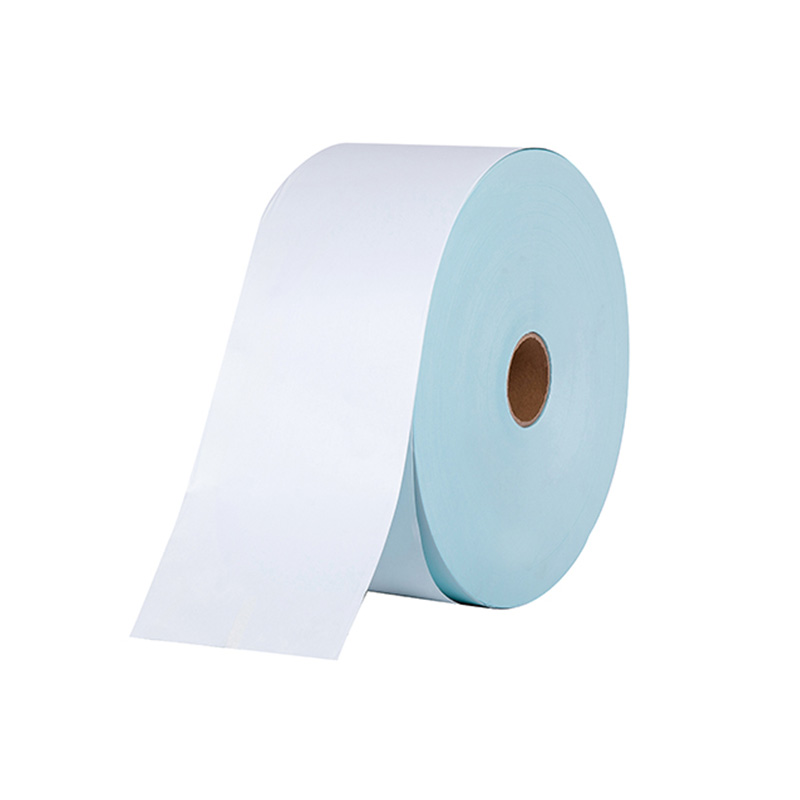
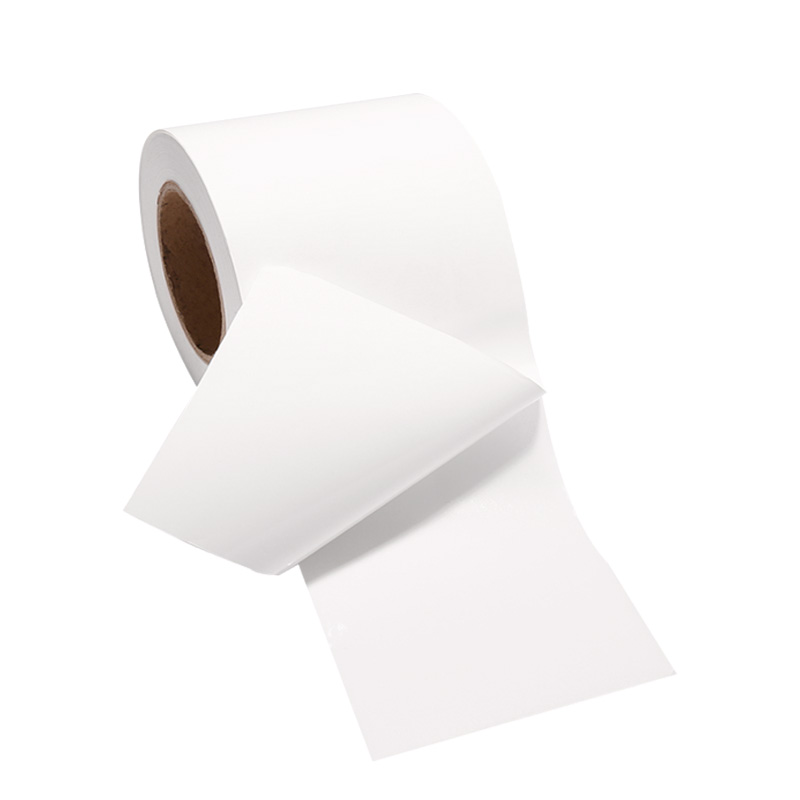
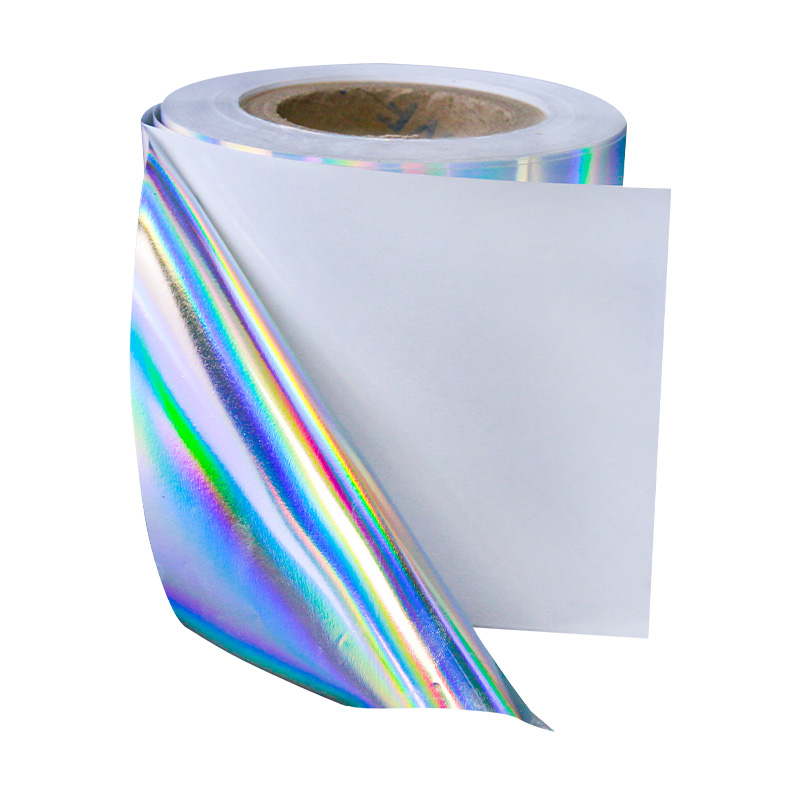
Label Material Suppliers Self Adhesive Waterproof Printing Sticker
Short Description:

Place of Origin:GuangDong
Usage:Custom Sticker
Type:Adhesive Sticker
Size:Customized
Printing:Bank
Materila:Eco-friendly


Product Detail

Certificate

Exhibition

Customer Reviews

Product Tags


Product Overview:

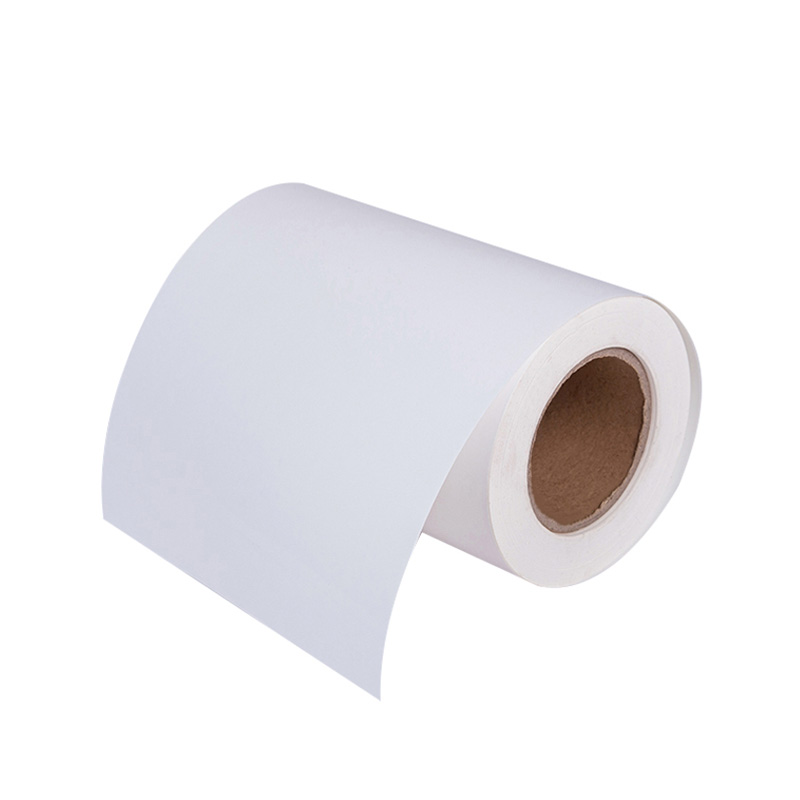
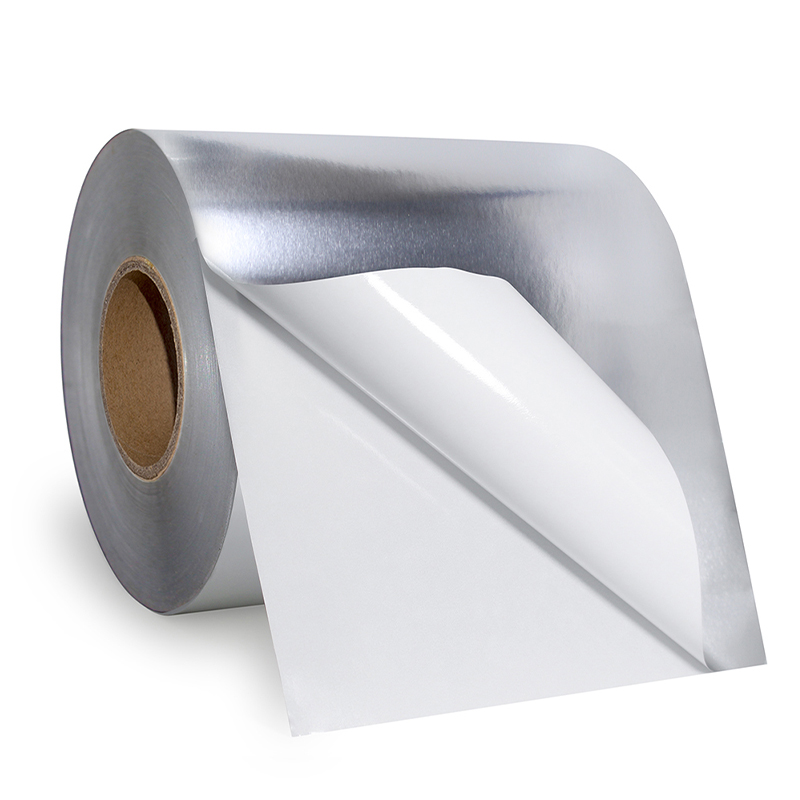
As one of the professional label material suppliers, Sailing Paper supplies self-adhesive labelstock for label converters, printing companies, packaging manufacturers, distributors and brand owners. Material constructions can combine different paper or film facestocks, pressure-sensitive adhesives and release liners to meet a wide range of printing, converting and end-use requirements.

Our custom self adhesive label materials can be configured for direct thermal, thermal transfer, inkjet, laser and pre-printed applications. From logistics and barcode identification to retail, product packaging and industrial use, the complete material construction can be selected according to the printer, target surface, temperature, converting process and final application.

For professional buyers, the objective is not simply to choose one facestock, but to match the complete combination of facestock, adhesive and liner to create suitable labelling materials for the actual production workflow.

What is the label materials?

Label materials generally refers to materials used to produce a variety of labels that can be attached to products, packages, documents or other items for purposes such as identification, illustration, warning or promotion.
Features : smooth surface, strong adhesive force, easy to peel off, clear printing, waterproof,
 BPA free, 
suitable for a variety of packaging and industrial products.

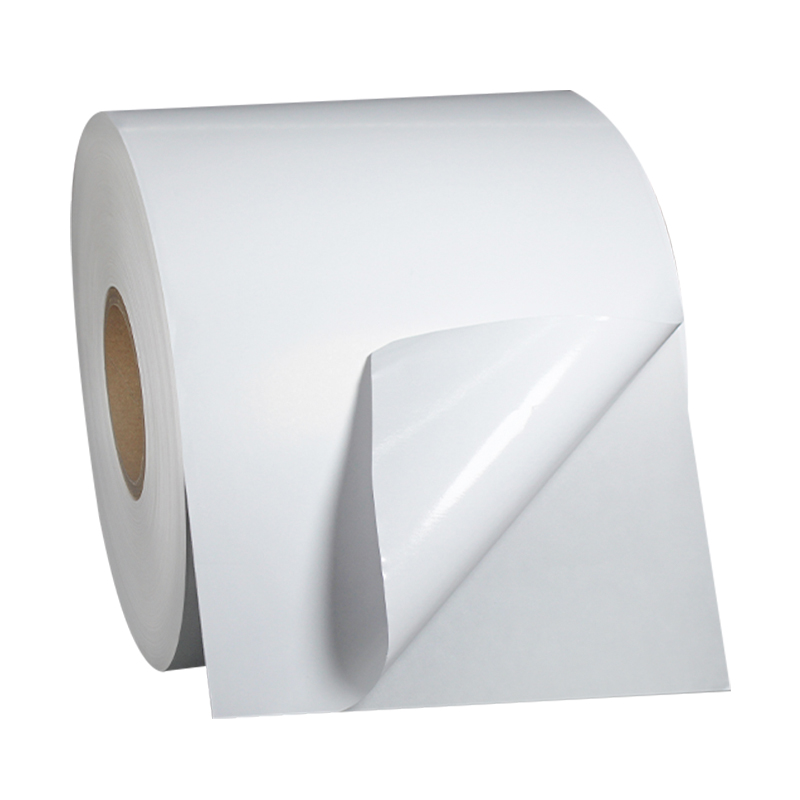
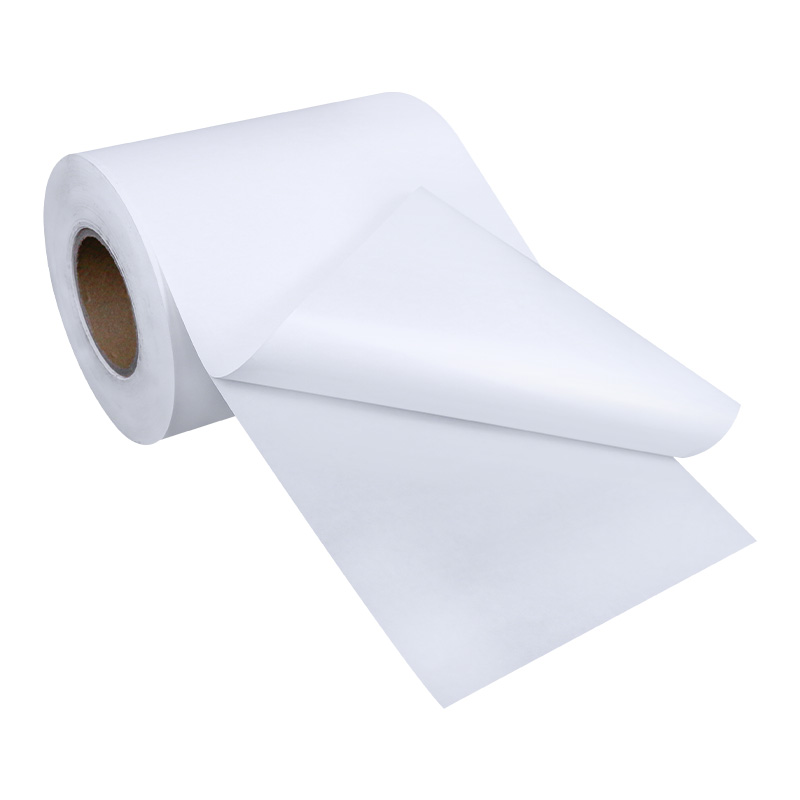
Material Structure:

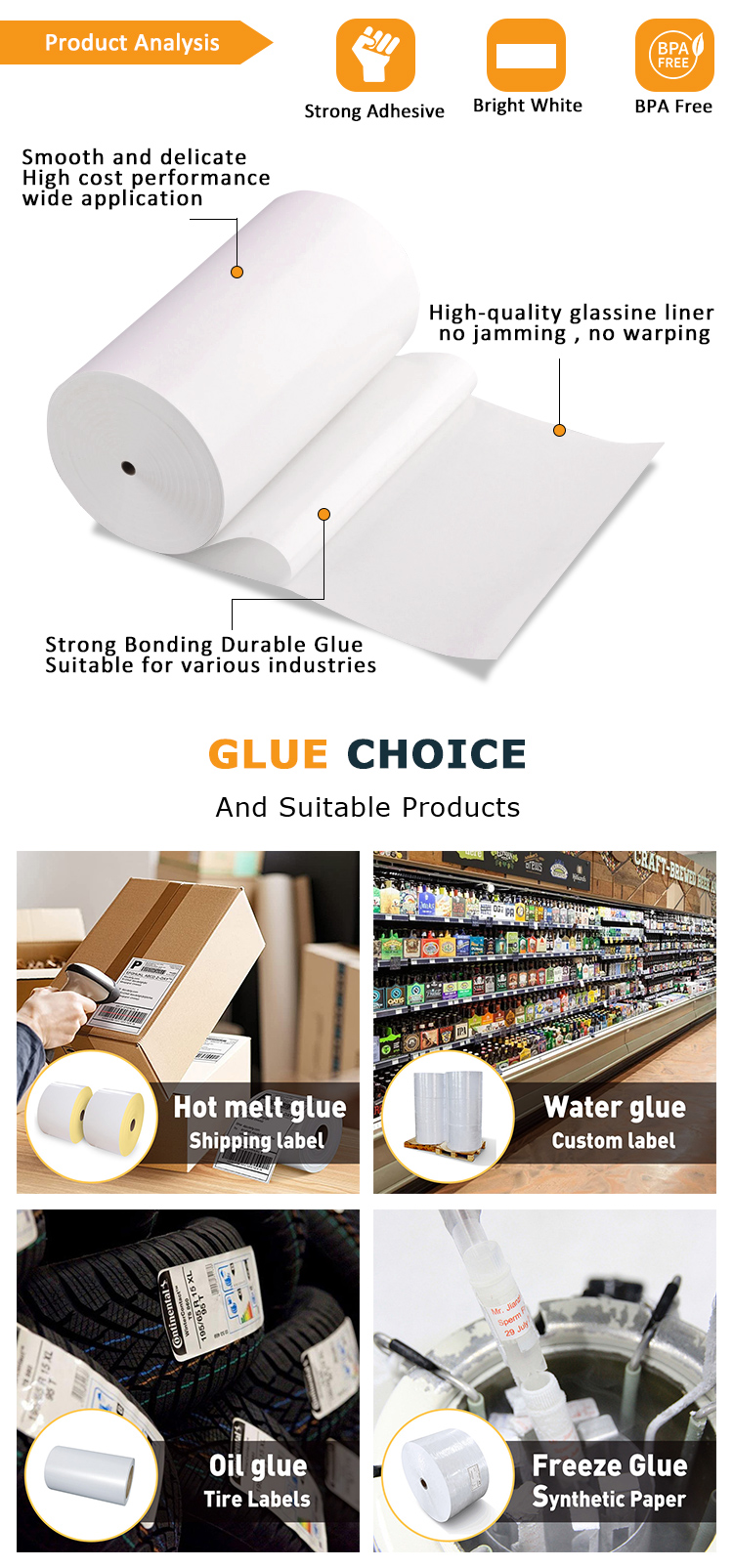
1.Face Stock: Smooth surface with uniform coating, ensuring sharp text, barcodes, and graphics
2.Adhesive Layer: Strong pressure-sensitive adhesive, suitable for cartons, plastic, glass, metal, and coated surfaces
3.Release Liner: Stable silicone-coated liner for smooth dispensing and easy peeling during automatic or manual labeling

How to Choose the Right Label Material:

The same label size can require very different materials depending on how and where the finished label will be used.

End Use Key Material Considerations
Logistics Print speed, barcode clarity, carton adhesion
Retail Print quality, appearance, scanning
Food & Beverage Packaging surface, temperature, moisture
Refrigerated Products Low-temperature adhesion, condensation
Cosmetics Bottle material, flexibility, appearance
Warehouse Barcode scanning, abrasion, roll consistency
Industrial Oil, chemicals, abrasion, long-term identification
Outdoor Use Moisture, UV exposure, temperature changes

Professional label material suppliers should therefore match material performance to the real application rather than applying one construction to every labeling project.

Paper Label Materials vs. Film Label Materials

Paper and film materials serve different performance and cost requirements.

1.Paper Label Materials
Paper is commonly selected where printing efficiency, visual presentation and cost control are important.
Typical applications include:
①Shipping labels
②Retail identification
③Barcode labels
④Carton labels
⑤Warehouse labels
⑥General product packaging

2.Film Label Materials
PP, BOPP, PE and PET can be considered when labels require additional resistance to moisture, handling or deformation.
Typical applications include:
①Bottles
②Cosmetics
③Personal-care products
④Refrigerated packaging
⑤Industrial identification
⑥Durable product labeling

When comparing label durability material options, higher durability does not automatically mean a better material. The most suitable construction is the one that meets the actual performance requirement without unnecessary over-specification.

Label Sticker Material Key Performance Advantages:

1.Excellent waterproof and moisture-resistant performance
2.Stable adhesion under normal temperature and humidity conditions
3.Clear and consistent printing for barcodes and variable data
4.No curling or edge lifting after application
5.BPA free, suitable for food-related and daily-use packaging

Sustainable Label Materials Printing Compatibility:

1.Compatible with thermal transfer and inkjet printing systems
2.Supports high-speed continuous printing
3.Suitable for desktop printers and industrial label printers
4.Maintains print clarity even in large-volume production

Label Sticker Printing Material Selection by Printing Method

Different printing technologies require different printable surfaces. Choosing the correct label sticker printing material helps improve print quality and production stability.

1.Direct Thermal
Requires heat-sensitive facestock and does not use a ribbon. It is commonly selected for high-volume variable-data applications.
2.Thermal Transfer
Uses ribbon and can be matched with different paper and synthetic materials according to the required print durability.
3.Inkjet
Requires a printable surface compatible with the customer's ink system. Ink absorption, drying and image definition should be confirmed before bulk production.
4.Laser
The complete sheet and adhesive construction should match the printer and printing conditions.
5.Pre-Printed Materials
When logos, colors, fixed graphics or product information are printed before converting, the material should also be matched to the chosen commercial printing process.

For new material projects, testing the actual printer, ink, toner or ribbon before large-volume purchasing can reduce compatibility problems later.

Barcode Label Material Selection

A reliable barcode label material needs to support not only clear printing but also stable scanning throughout the required service period.

Important factors include:
①Surface smoothness
②Print contrast
③Barcode edge definition
④Ribbon or ink compatibility
⑤Abrasion exposure
⑥Moisture exposure
⑦Required information lifetime
⑧Adhesive stability

Barcode materials can be used for warehouse inventory, logistics, retail, production tracking, asset management and distribution-center operations.

If barcode information needs to remain readable for an extended period, facestock, printing method and application environment should be considered together.

Label And Packaging Materials Application Scenarios:

1.Shipping and logistics labels
2.Product identification and barcode labels
3.Warehouse and inventory management
4.Retail price and information labels
5.Industrial and manufacturing labeling

Labels & Packaging Materials Compatibility:

Labels are part of the complete packaging system. Compatibility between labels & packaging materials can directly influence adhesion, appearance and labeling efficiency.

1.Plastic Packaging
PE, PP, PET and other plastics can have different surface characteristics. Material flexibility and adhesive performance should be matched to the actual container.
2.Glass Bottles and Jars
Label transparency, visual appearance, moisture exposure and long-term adhesion may all need consideration.
3.Paper Cartons
Coating, surface texture and porosity can influence adhesive performance.
4.Flexible Packaging
For packaging that bends or deforms during handling, label flexibility should also be considered.

Choosing suitable label packaging materials according to the actual container helps reduce lifting, peeling and application problems later in production.

Adhesive Label Material Customization Options:

1.Custom sizes and roll configurations
2.Different adhesive strengths available upon request
3.Custom logo, text, and barcode printing support
4.Optional liner types and core sizes

Adhesive Behavior on Different Surfaces:

This pressure sensitive label material demonstrates stable bonding performance across a wide range of substrates. Adhesion strength remains consistent on both smooth and slightly textured surfaces, ensuring labels stay in place throughout storage, transportation, and end use.

1.Excellent adhesion on cartons and corrugated boxes
2.Reliable bonding on plastic (PE, PP, PET) surfaces
3.Stable performance on glass and coated metal
4.No residue or surface damage after removal (depending on adhesive type)

Pressure Sensitive Label Materials: Application Temperature vs. Service Temperature

When selecting pressure sensitive label materials, temperature should be evaluated in two different ways.

1.Application Temperature
The temperature of the product or substrate when the label is first applied.

2.Service Temperature
The temperature conditions the label experiences after it has been correctly applied.

These two values are not interchangeable.

For example, a label may be applied to chilled packaging and then remain in refrigerated storage. The adhesive therefore needs to perform during both initial application and subsequent use.

For customers searching for pressure sensitive labels material for frozen, chilled or temperature-changing environments, providing both temperature conditions helps define the material more accurately.

How to Choose a Release Liner?

Release liner selection affects more than peeling the finished label. It can also influence die-cutting, matrix stripping, dispensing and automated application.

1.Glassine Liner
Commonly used for roll-label converting and suitable for many standard die-cutting and automatic labeling workflows.
2.PET Liner
Can be considered where a thinner and dimensionally stable liner is preferred for precise converting or compact roll construction.
3.CCK Liner
May be selected for certain sheet or converting applications depending on the finished product requirements.
When selecting a liner, buyers should consider:
①Converting equipment
②Die-cutting method
③Matrix stripping
④Automatic or manual application
⑤Roll diameter
⑥Label shape
⑦Finished format

The liner should therefore be treated as part of the complete material structure rather than simply as backing paper.

Label Conversion & Processing Performance:

The material is optimized for label converting processes, including slitting, die-cutting, and rewinding, ensuring clean edges and consistent label dimensions.

1.Smooth die-cutting without edge tearing
2.Consistent label shape and size accuracy
3.Suitable for roll-to-roll processing
4.Supports high-efficiency mass production

Label Material Supply Formats:

Different buyers purchase label materials at different stages of the converting process.

1.Jumbo Rolls
Suitable for label converters and larger printing companies performing their own slitting, printing, die-cutting or further processing.
2.Slit Rolls
Suitable for customers requiring specific web widths for their converting equipment.
3.Sheet Materials
Can be supplied for selected sheet-fed printing and converting workflows.
4.Converted Label Stock
For customers that do not perform complete converting internally, material can be further converted into specific label dimensions and roll configurations.
Before ordering, customers should confirm:
①Material width
②Roll length
③Core size
Maximum roll diameter
Winding direction
Quantity
Finished format

This helps ensure that the material matches the customer's equipment and production process.

Material Label Shelf Life & Storage Stability:

The label material is designed to maintain stable physical and adhesive performance during long-term storage under recommended conditions. Proper storage helps preserve printability, adhesion strength, and liner release performance.

1.Recommended storage in cool, dry environments
2.Stable adhesion and surface performance over time
3.Reduced risk of adhesive aging or liner deformation
4.Suitable for customers with inventory turnover cycles

Outdoor Label Material Selection:

An outdoor label material may face more demanding conditions than standard indoor labelstock.

Depending on the application, buyers should evaluate:
1.Sunlight and UV exposure
2.Rain and moisture
3.Humidity
4.Temperature changes
5.Abrasion
6.Dirt and contamination
7.Print durability
8.Adhesive holding performance

For longer outdoor applications, a film facestock, appropriate printing method and optional protective treatment can be considered according to actual requirements.

Material selection should therefore be based on expected environmental exposure rather than simply choosing a product described as waterproof.

Eco-Friendly Label Materials: Practical Selection Considerations:

For customers evaluating eco-friendly label materials, environmental performance should be considered together with printing, converting and final packaging requirements.

Possible areas to evaluate include:
1.Paper-based material options
2.Reduced material usage
3.Thinner constructions where appropriate
4.Release-liner optimization
5.Packaging reduction
6.Recyclability goals
7.Avoiding unnecessary over-specification

A more sustainable solution should still perform reliably during printing, converting, application and product use.

For this reason, material efficiency and actual application performance should be evaluated together rather than focusing on one environmental claim alone.

Compostable Label Material Risk Reduction for Operations:

Consistent material sticker label quality helps customers minimize operational risks such as printer downtime, mislabeling, and rework caused by unstable materials.

1.Reduces printer jams and label feeding issues
2.Improves labeling accuracy and efficiency
3.Minimizes reprinting and labor waste
4.Supports smooth warehouse and logistics operations

Compatibility with Automated Labeling:

The material labels custom is suitable for automated labeling systems, supporting consistent feeding, peeling, and application during high-speed operations.

1.Smooth liner release for automatic applicators
2.Stable label dispensing at high speeds
3.Reduced risk of misalignment or label breakage
4.Suitable for semi-automatic and fully automatic lines

Customer Segmentation Fit:

This label material is suitable for a wide range of customer types and business models.

1.E-commerce sellers and fulfillment centers
2.Logistics companies and warehouses
3.Retail chains and distributors
4.OEM manufacturers and brand owners

What Label Converters Should Confirm Before Ordering?

For converters, printers and professional users, material selection should also consider processing efficiency.

Before ordering, buyers should confirm:
1.Facestock type
2.Facestock GSM or thickness
3.Adhesive type
4.Release liner
5.Liner GSM or thickness
6.Printing technology
7.Roll width
8.Roll length
9.Core size
10.Winding direction
11.Application temperature
12.Service environment

Together, these parameters define the complete pressure sensitive labels material more accurately than a general product name alone.

Converters should also consider die-cutting, matrix stripping, slitting, liner release and roll winding because a material that prints well but converts poorly may still increase total production cost.

Material Label Printing Long-Term Cooperation Value:

The material is developed to support long-term partnerships, offering stable quality, scalable supply, and continuous support as customer demand grows.

1.Suitable for long-term supply agreements
2.Scalable production capacity for growing demand
3.Technical support during product upgrades
4.Reliable partner for brand development

Sample Qualification Before Bulk Orders:

For a new material construction, sample testing can help confirm compatibility before large-volume purchasing.

Recommended evaluation includes:
1.Printing quality
2.Ink, toner or ribbon compatibility
3.Barcode readability
4.Die-cutting performance
5.Matrix stripping
6.Adhesion on the actual substrate
7.Liner release
8.Automatic dispensing
9.Environmental performance where required

Once the combination of facestock, adhesive and liner is approved, the specification can be retained as the reference for future production.

This is particularly useful for label converters, distributors and customers using the same material across multiple products.

Label Material in China for Global Buyers

For international buyers sourcing label material in China, the purchasing decision should consider more than the initial material price.

Important evaluation points include:
1.Facestock consistency
2.Adhesive stability
3.Coating uniformity
4.Release-liner performance
5.Printing compatibility
6.Slitting quality
7.Roll winding
8.Converting stability
9.Batch consistency
10.Customization capability
11.Export packaging
12.Repeat-order control

Sailing Paper can support material selection, slitting, converting and customized supply according to different B2B production requirements.

For recurring projects, the approved material specification can also be standardized to simplify future purchasing.

Label Materials Wholesale for Converters and Distributors

For converters, distributors, printing companies and commercial customers purchasing label materials wholesale, overall production efficiency can be as important as the initial material cost.

Important considerations include:
1.Printing compatibility
2.Die-cutting performance
3.Matrix stripping
4.Slitting stability
5.Liner release
6.Roll winding
7.Automatic dispensing
8.Material consistency
9.Repeat-order stability

A lower-priced material does not necessarily reduce total production cost if it creates additional problems during printing, converting or labeling.

Standardizing the complete material construction is therefore especially valuable for long-term wholesale purchasing.

Repeat-Order Specification Control

For long-term B2B projects, a standardized material specification can include:
1.Facestock type
2.GSM or thickness
3.Adhesive
4.Release liner
5.Liner GSM or thickness
6.Roll width
7.Roll length
8.Core size
9.Winding direction
10.Printing method
11.Application temperature
12.Service temperature
13.End-use environment
14.Packaging configuration

Once these parameters are confirmed, repeat orders can follow the approved specification instead of restarting the material-selection process every time.

This helps distributors and converters maintain more consistent production settings and material requirements between different orders.

<LABEL MATERIALS> 
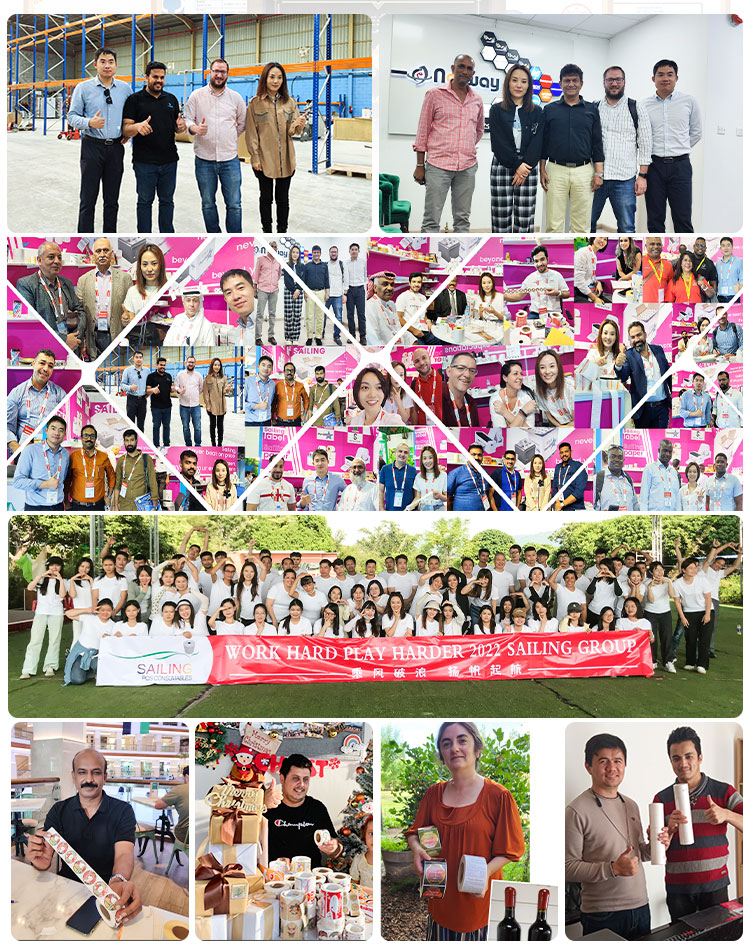
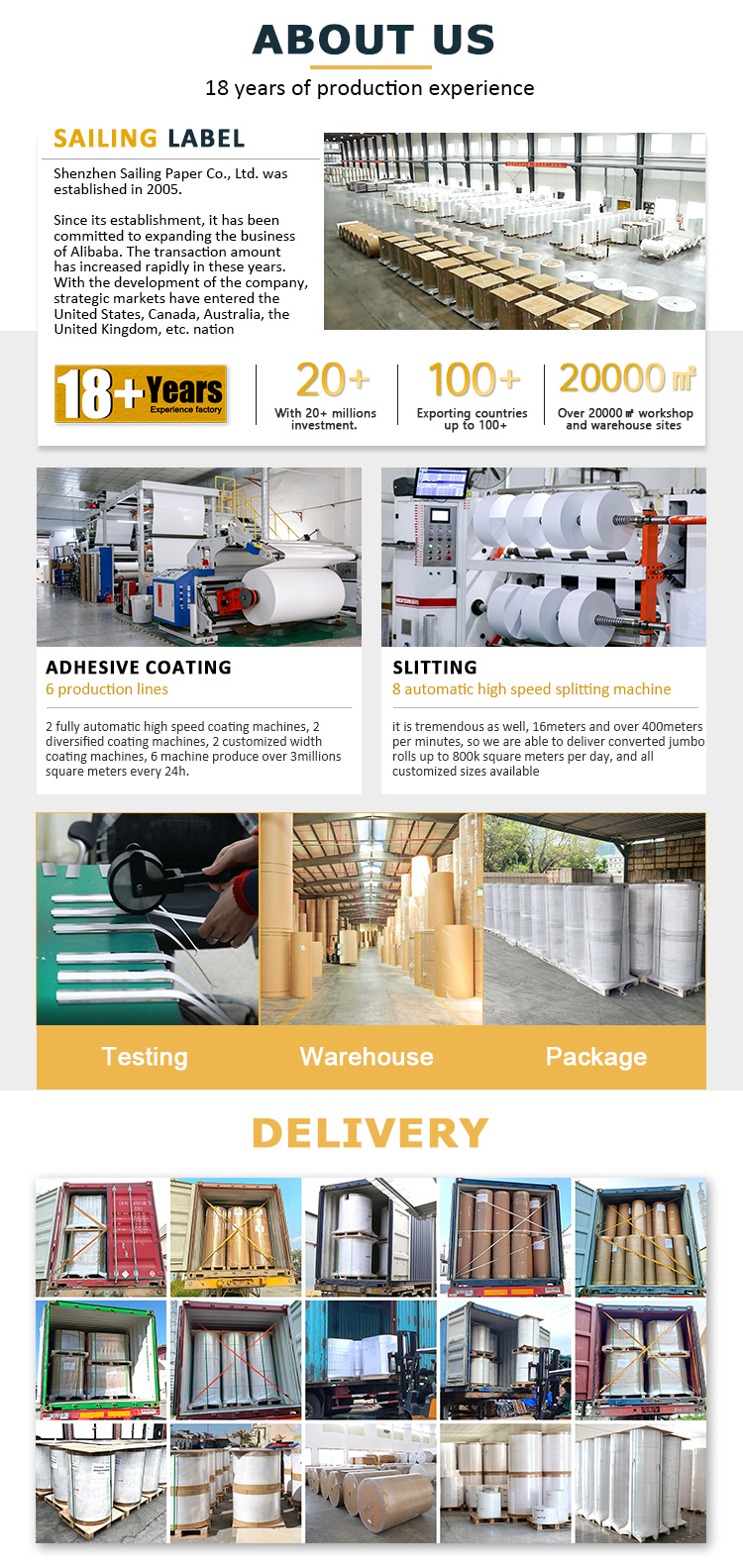
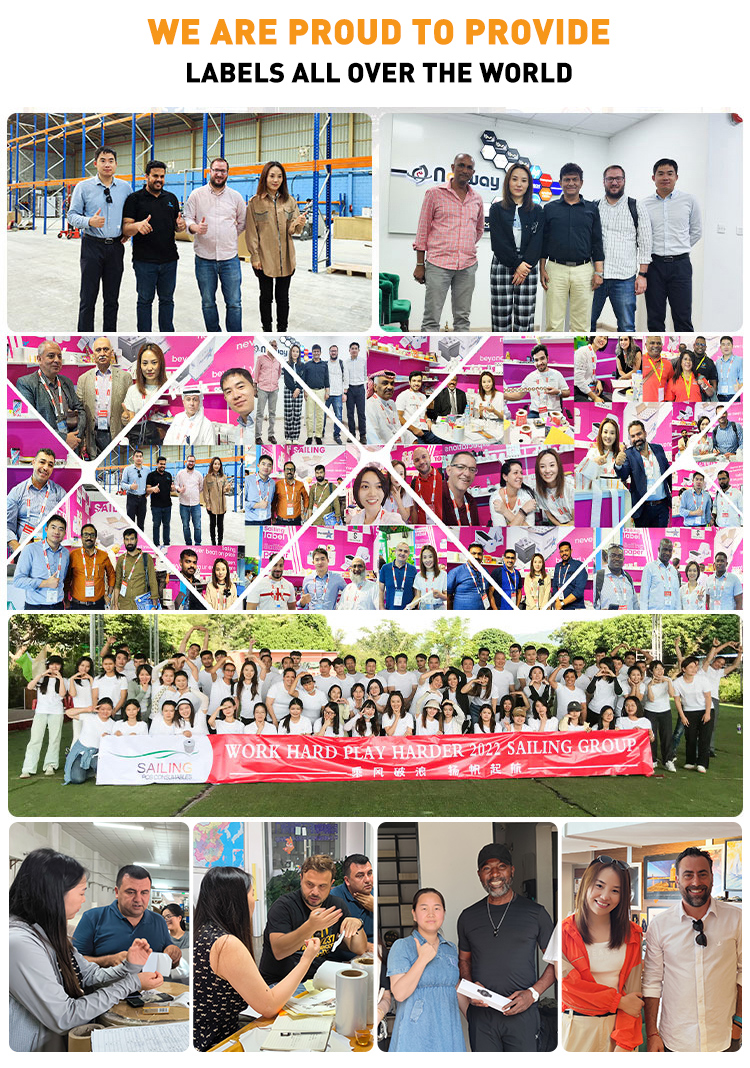
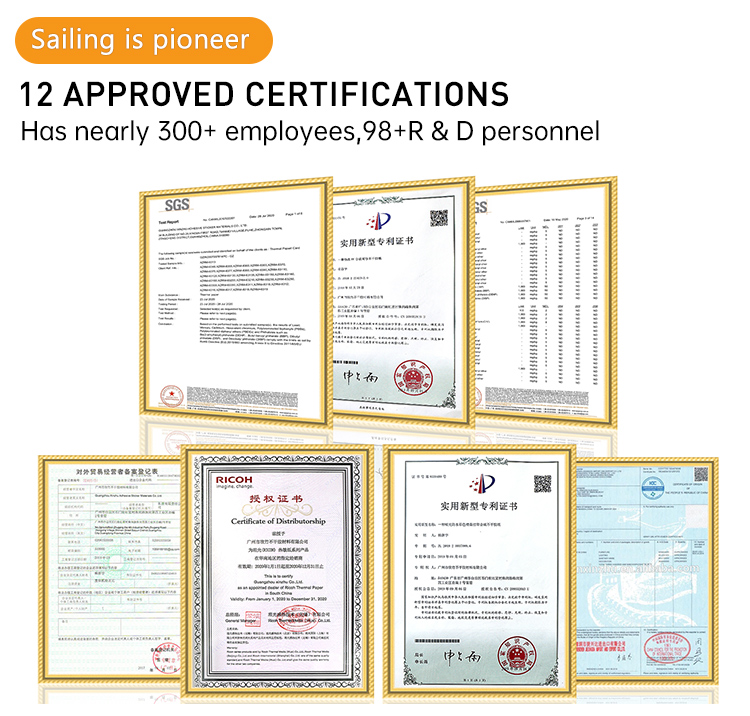
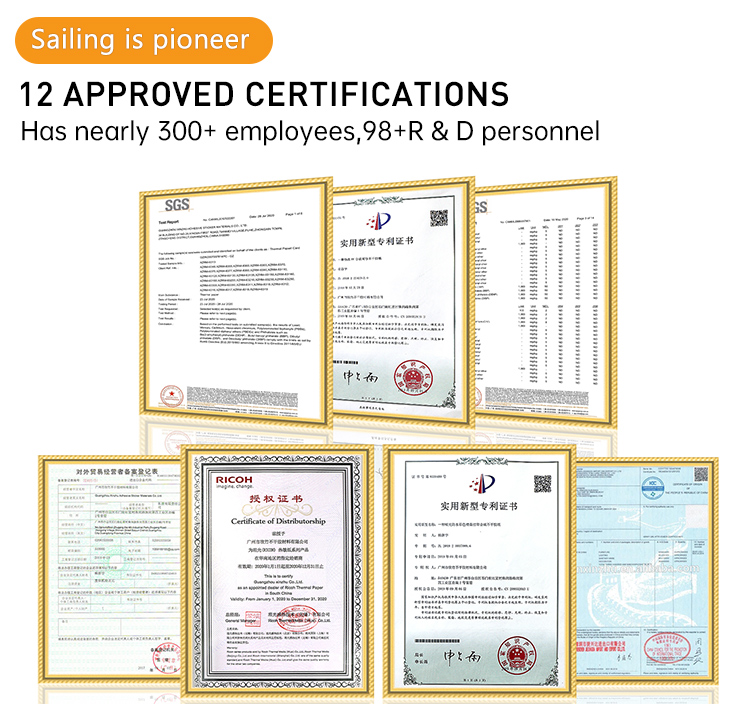
We have more than 19 years of experience in manufacturing products, sailingpaper company was established in 2005, is a label material suppliers ,mainly dealing with thermal paper, thermal labels, shipping labels, label materials and so on, with more than 20,000 square metres of workshop and warehouse space, exporting to more than 100 countries, the company is steadily expanding the market.
Our company has a strong and professional R&D team and experienced manufacturing workers, the quality of our products is guaranteed, of course, we will also introduce our products to you carefully, so that you can know more about them and feel free to buy our products. At the same time, we provide one-stop after-sales service, patiently answer and solve your problems.
Get the Right Label Material:

Looking for reliable label material suppliers? Sailing Paper provides customized pressure sensitive label materials for different printing, packaging and labeling applications.

Contact us for free samples, material recommendations and a factory-direct quotation.

新原材料01

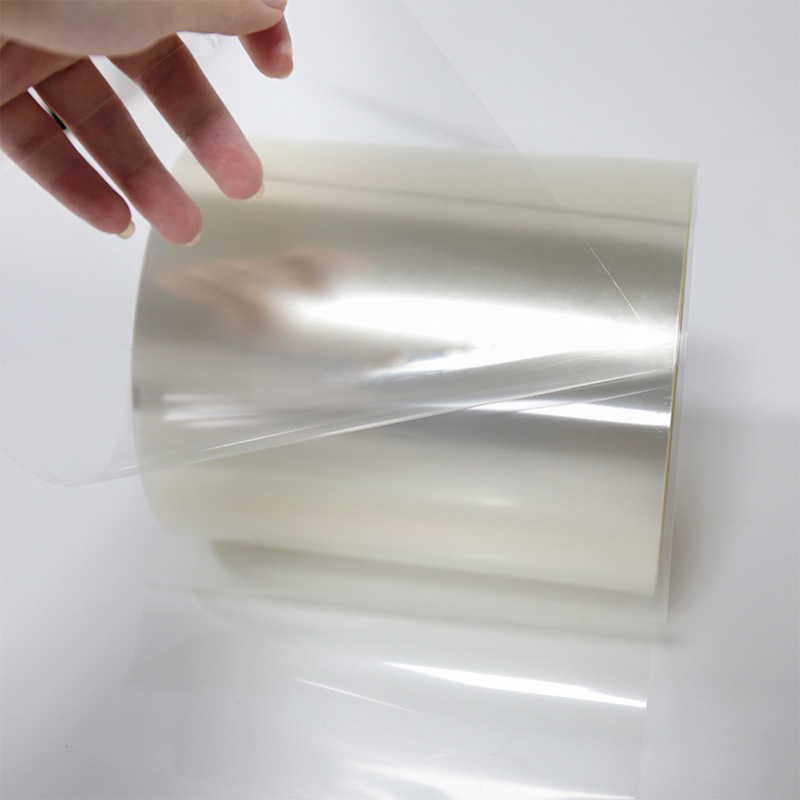
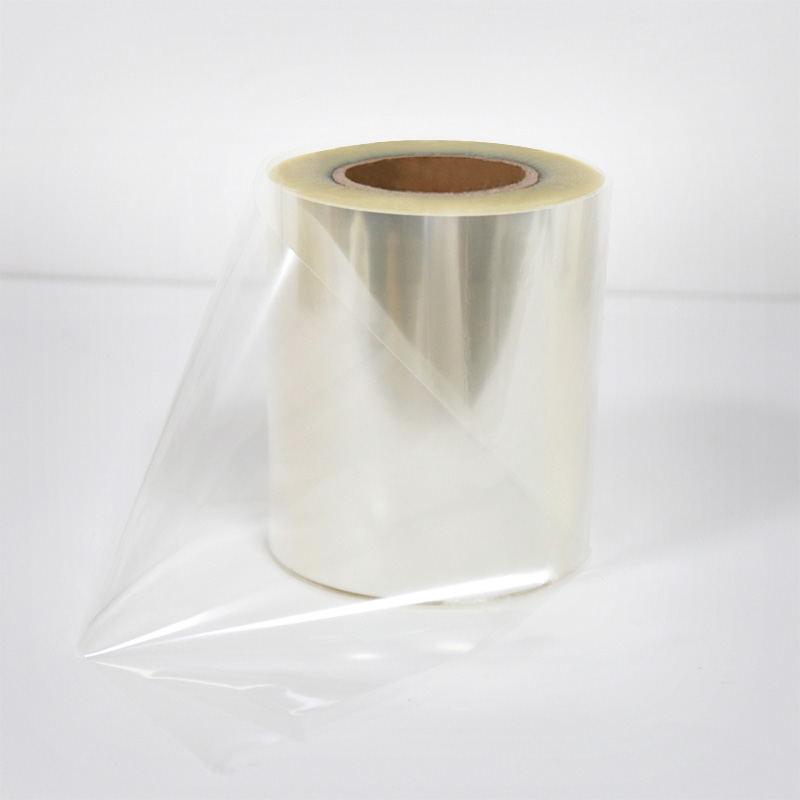
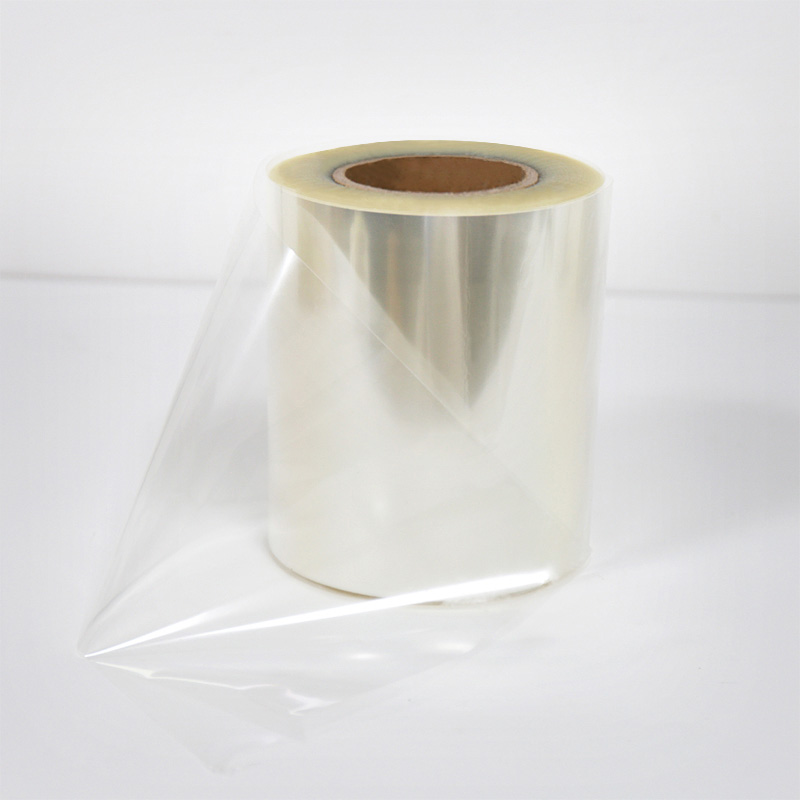
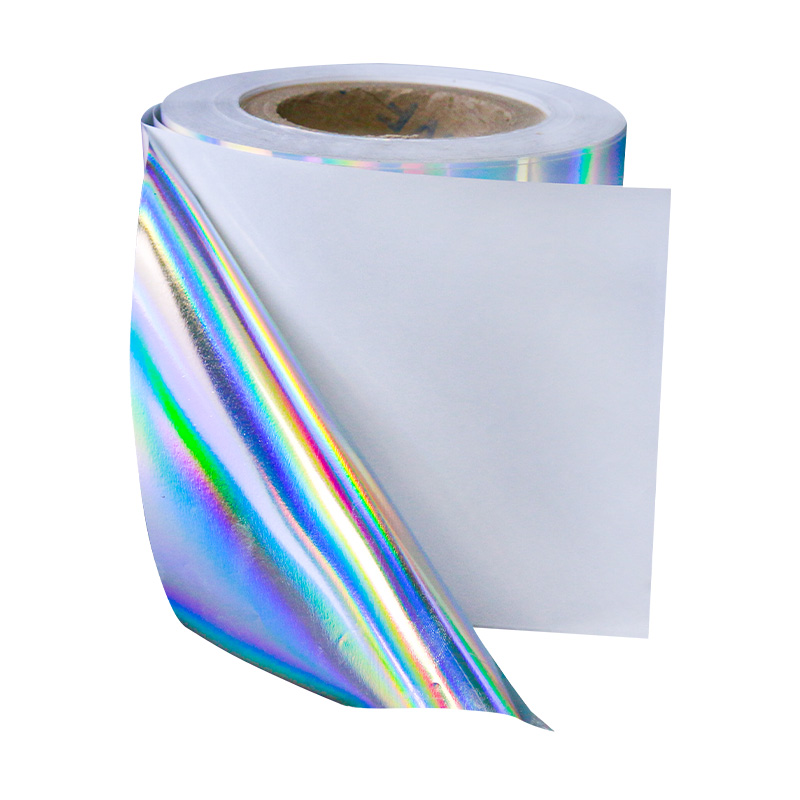
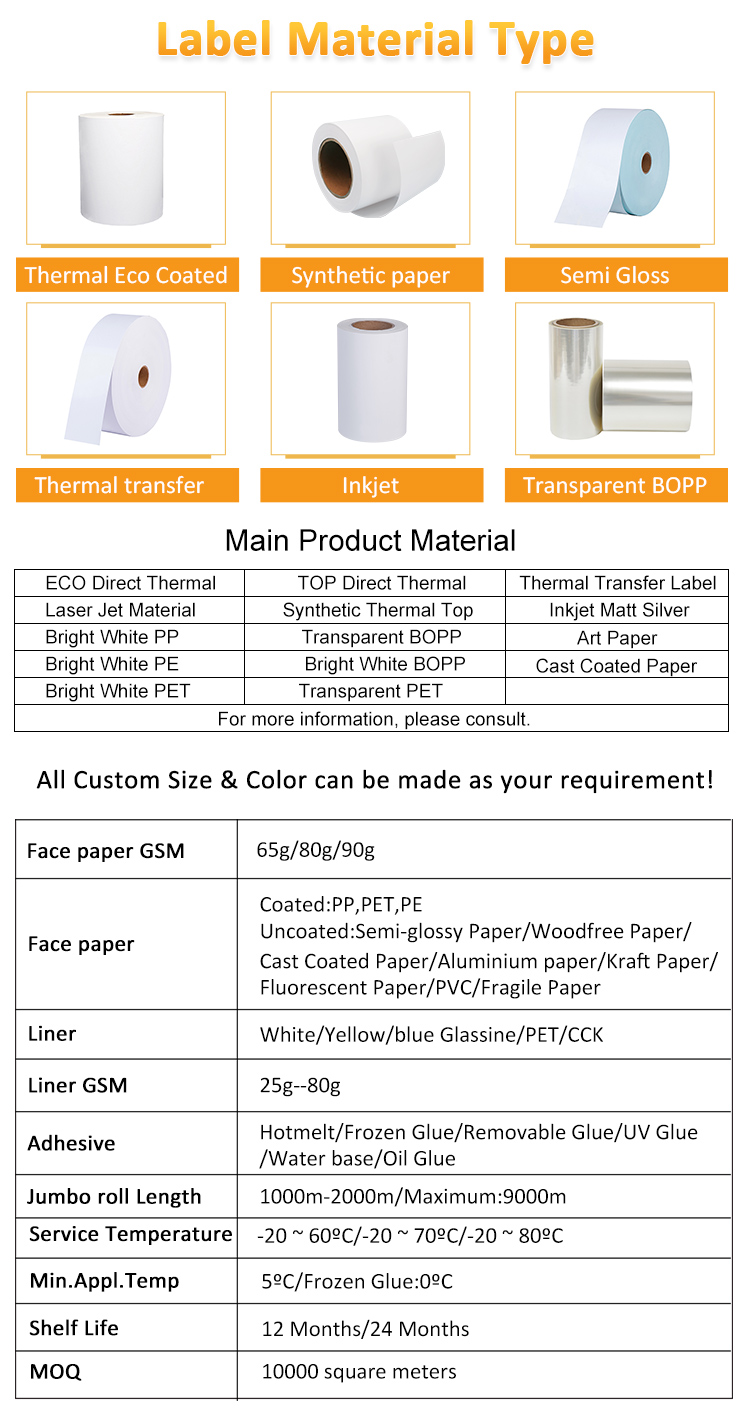
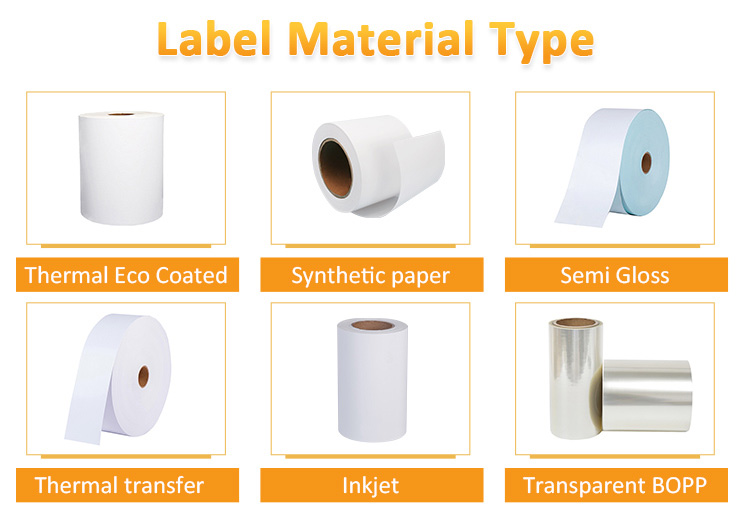
Here are some of our label material types:Thermal Eco Coated/Synthetic label material paper/Semi Gloss/Thermal Transfer Label Material /Inkjet/Transparent BOPP Label Material 
微信图片_20231205143607
Main Product Material

ECO Direct Thermal

TOP Direct Thermal

Thermal Transfer Label

Laser Jet Material

Synthetic Thermal Top

Inkjet Matt Silver

Bright White PP

Transparent BOPP

Art Paper

Bright White PE

Bright White BOPP

Cast Coated Paper

Bright White PET

Transparent PET


For more information, please consult.

All Custom Size & Color can be made as your requirement!

Face paper GSM

65g/80g/90g

Face paper

Coated:PP,PET,PEUncoated:Semi-glossy Paper/Woodfree Paper/Cast Coated Paper/Aluminium paper/Kraft Paper/Fluorescent Paper/PVC/Fragile Paper

Liner

White/Yellow/blue Glassine/PET/CCK

Liner GSM

25g--80g

Adhesive

Hotmelt/Frozen Glue/Removable Glue/UV Glue/Water base/Oil Glue

Jumbo roll Length

1000m-2000m/Maximum:9000m

Service Temperature

-20~609C-20~709C/-20~809C

Min.Appl.Temp

5°C/Frozen Glue:0°C

Shelf Life

12Months/24 Months

MOQ

10000 square meters


product label materials details

新原材料03
新原材料04

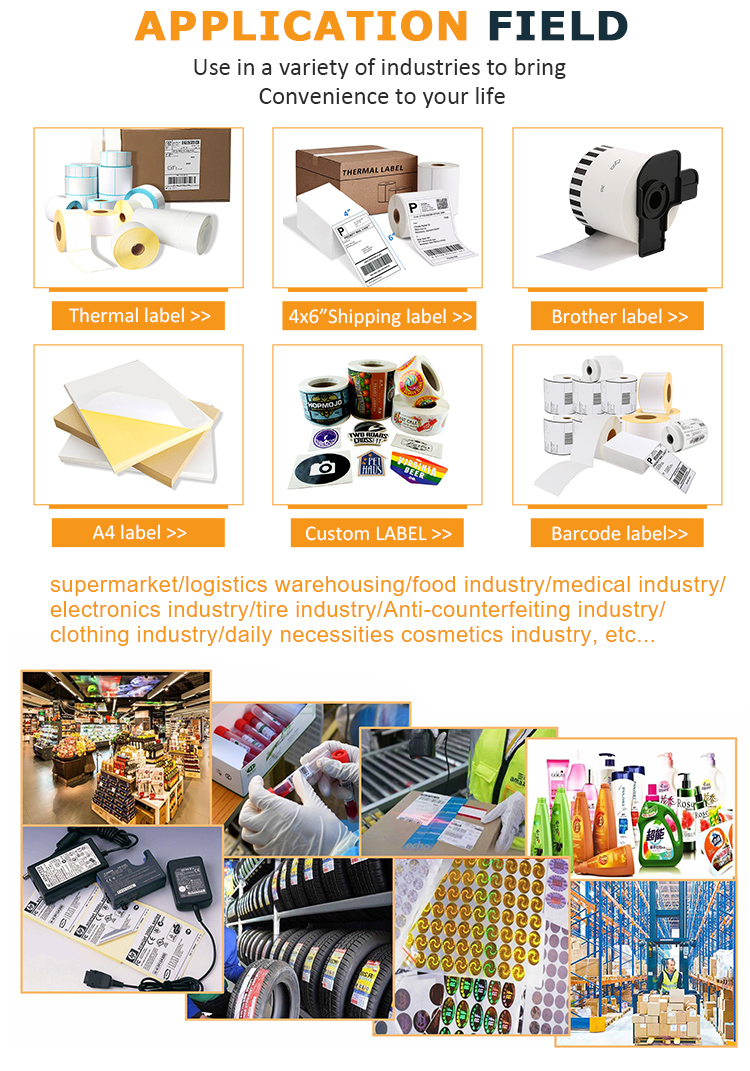
The wide application of label materials makes it an indispensable part of all walks of life. In the retail sector, product labels play a key role in the transmission of information, not only providing basic attributes and prices of goods, but also enabling efficient inventory management and sales tracking through barcodes or QR codes. At the same time, in logistics transportation, the label is more intimate to mark the goods, providing key data for logistics management.


In the industrial sector, safety labels are used to provide important safety information to help maintain a safe workplace environment.


In general, the application scenarios of label materials are rich and diverse, which not only meets the needs of basic information transmission, but also ADAPTS to the diversified requirements of society, economy and environmental protection. The continuous progress of technology has also made labels better serve the needs of various industries while providing more functions and information, and provide convenience for product life cycle management and consumer experience.
新原材料05
新原材料06
新原材料07


FAQ 

Q: Are you a factory or trading company?

A: We are the biggest converting factory in south of China


Q: Can you do design for me?

A: our professional designer will make artwork for cartons and printing.


Q: Can I have a sample order for paper roll?

A: sample pacakge with different quality are free for picking up 


Q: What about the lead time?

A: Mass production time needs 2-3 weeks.


Packaging & Delivery

Packaging Detail:Plastic sealed, cardboard box, able to be customized at customers' requests applications

Delivery Detail:Within 15days after order confirmed


About us 

1、Sailing paper locate in shenzhen China,specializes in coating and converting of thermal paper, carbon less paper, label rolls both plain and printed, etc. We are an exporter in this particular line for many years.

2、Our goal: Exceeding your expectations

3、Sailing paper strives to help you on saving your time and money .


 Your inquire will be answered within 24 hours.Any inquiries we are happy to reply, pls send your questions and orders. Wishing to be your long-business partner.

  • Previous:
  • Next:

  • 新原材料06

    新大卷_08

    新原材料07